
'The correction could take two to three months and traders need to be careful.' 'For investors, this could be a good time to nibble in.'

From the Sensex pack, JSW Steel, Tata Steel, NTPC and UltraTech Cement emerged as major winners, closing the day with a gain of up to 3.33 per cent. On the other hand, Asian Paints, ITC, L&T and SBI were the laggards, ending the session up to 3.95 per cent lower. Of the 30 Sensex stocks, 14 closed the day in green, while on the 50-stock index Nifty 25 scrips ended with gains.

The rally in mid- and small-cap stocks has spilled over into the IT sector as well. Second and third-tier IT stocks, which historically traded at a discount to the big five IT companies, are now trading at nearly 25 per cent premium to their large-cap peers. The smaller IT companies have a price-to-earnings (P/E) multiple of nearly 38 times against the big five's current P/E multiple of around 31x.

Professional CEOs in the sector draw a much higher remuneration than promoter CEOs, points out report by IiAS.

Benchmark BSE Sensex and Nifty closed higher in a highly volatile trade on Monday, riding on the back of a recovery in IT, oil and financial stocks after a two-day fall. The 30-share Sensex recovered 169.51 points or 0.29 per cent to settle at 59,500.41. During the day, it rose by 313.34 points or 0.52 per cent to 59,644.24.

Of the top 10 valued firms, eight including Reliance Industries, Tata Consultancy Services (TCS), HDFC Bank, Hindustan Unilever Ltd, HDFC and ITC witnessed gains in their market valuation. From the top-10 pack, the valuation of HDFC Bank jumped Rs 31,553.45 crore to Rs 929,752.54 crore.

In the Sensex kitty, ITC turned star performer by surging 2.45 per cent, followed by NTPC rising 2.19 per cent.

'I want us not to underestimate Indian voters. They can tell good work from bad.'

M&M was the biggest loser in the Sensex chart, falling 6.39 per cent, followed by Tech Mahindra, Nestle India, Bajaj Finance, Axis Bank, ITC, JSW Steel, HDFC Bank and RIL. On the other hand, Sun Pharma, Tata Motors, Bharti Airtel, L&T and Infosys were among the winners, rising up to 2.10 per cent.

A total of 183 stocks rallied 10 per cent, of which 32 stocks saw price appreciation of 20 per cent each.

After the success of the National Highways Authority of India's (NHAI's) first infrastructure investment trust (InvIT) with foreign institutional investors, the Centre is working on a proposal to launch a fresh InvIT for national highways, where domestic retail investors can hold units of the trust

There is no near-term respite for the country's largest fast-moving consumer goods maker, Hindustan Unilever (HUL), which is facing multiple challenges on the growth front. With demand showing no signs of improvement, especially in the rural segment, the October-December quarter (Q3) of 2023-24 (FY24) is likely to be similar to the previous quarter, with volume growth in the low single digits. The stock, which is down 7 per cent over the past year compared to the 11 per cent jump for the S&P BSE Sensex, could underperform the benchmark in the near term as well.

Technology stocks rallied, with the IT index up 2.45 per cent as TCS, Infosys, Wipro and HCL Technologies spurted following favourable rupee movement.
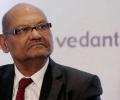
Indian lenders are unlikely to clear the vertical split of BSE-listed Vedanta Ltd in a hurry, considering that the demerger would reduce the fungibility of cash flows across businesses and increase their volatility, according to analysts. The demerger plan, which would result in six separate listed entities, would require approval from shareholders, lenders and other statutory bodies. "We believe that a separate listing of different businesses would reduce the fungibility of cash flows across businesses and increase the volatility of cash flows.

This would be a 10-fold jump from $10-12 bn raised a year from Indian markets over past 2-3 years

Hindustan Zinc (HZL), a subsidiary of Vedanta, announced an interim dividend of Rs 21 per share last week, resulting in an outflow of Rs 8,863 crore. The announcement has turned the spotlight on India Inc's dividend-paying policy - more so for reasons driving the generosity of firms. An analysis of BSE 500 companies by Business Standard Research Bureau shows that some of the top 20 dividend-paying companies in 2021-22 (FY22) include Vedanta, Tata Consultancy Services, HZL, Oil and Natural Gas Corporation (ONGC), Indian Oil Corporation (IndianOil), Hindustan Unilever (HUL), Reliance Industries (RIL), and Bajaj Auto, among others.

Among the Sensex stocks, Larsen & Toubro rose the most by 3.96 per cent after the company announced a major project win in the Middle East. HDFC, HDFC Bank, Sun Pharma, ITC, HUL, Titan, TCS, HCL Tech, Asian Paints, Bajaj Finance, Infosys and Tata Steel were among the major gainers.

The Sensex ended down six points at 22,758 and the Nifty edged lower by two points to close at 6,815.
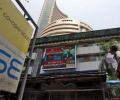
Benchmark indices Sensex and Nifty declined in early trade on Wednesday due to selling in financials, oil and IT stocks amid weak global trends.
Investors' wealth fell by Rs 2.39 lakh crore on Monday in line with a weak trend in the global equity markets. The BSE Sensex tanked 861.25 points or 1.46 per cent to settle at 57,972.62. During the day, it tumbled 1,466.4 points or 2.49 per cent to 57,367.47.
Wipro, Steel Authority of India, HDFC Bank, Mahanagar Telephone Nigam, Bharat Heavy Electricals and Reliance Commnications among companies reporting a decline in headcount in FY17.
Market sentiment suffered a jolt after other Asian markets closed with widespread losses and European markets dropped in early trade

The bullishness in the Indian stock market is likely to continue and the benchmark Sensex will reach 32,500 by December 2015, global brokerage firm Morgan Stanley said.

A weaker rupee could aid corporate earnings through its positive impact on export intensive sectors such as information technology services, pharmaceuticals and commodity producers such as metal and mining, and oil and gas companies.

Sensex firm on favourable GDP numbers for FY16.

The stock fell by 24.5 per cent to its 52-week low level of Rs 111.25 in opening trade at the BSE.

Macro economic environment in India is expected to improve further and drive the BSE index, Sensex, to 33,500 by December-end.

The growth was led by family-owned companies and business groups with presence in pharmaceuticals, information technology services, and consumer products.
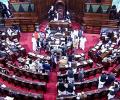
A private member resolution seeking that the government implement the recommendations of the Sachar Committee report and other reports that have discussed the educational and social backwardness of Muslims and enact a legislation for the prevention of atrocities against minorities was moved in the Rajya Sabha on Friday.

Investors became poorer by over Rs 4.47 lakh crore on Friday as markets faced severe drubbing, mirroring weak trends in global equities. The 30-share BSE benchmark dived 866.65 points or 1.56 per cent to settle at 54,835.58. During the day, it tumbled 1,115.48 points or 2 per cent to 54,586.75.

Shrinking inflows and surging outflows on account of profit-booking has curtailed mutual fund (MF) investments in equities since April. The total investments made by equity MFs during the first three months of 2023-24 stands at just Rs 2,980 crore, compared with an average monthly investment of Rs 14,500 crore in 2022-23, reveals data from the Securities and Exchange Board of India. "We are seeing signs of moderation in non-systematic investment plan (SIP) contribution, which has impacted domestic fund inflows in recent months to some extent," says Kunal Vora, head-India equity research, BNP Paribas.

Oil and Natural Gas Corporation, Hindalco Industries, Tata Steel and Vedanta were down up to 70 per cent below their one-year highs.

This amount does not include losses suffered indirectly through investment in mutual funds (MFs) and insurance companies.

Investor wealth slumped by Rs 3.7 lakh crore on Monday, as the equity market recorded its biggest single-day fall in two months.

The markets have given a thumbs down to Jubilant FoodWorks results for the April-June quarter (Q1) of 2023-24 (FY24). The company, which owns and operates Domino's Pizza and Popeyes chain of stores, reported a (standalone) net profit of Rs 75.2 crore in Q1 of FY24 - a drop of 25.5 per cent year-on-year (YoY) from Rs 101 crore, but a quarter-on-quarter (QoQ) rise from Rs 47.5 crore. What's worrying the Street is the likelihood of a dismal Q2FY24 performance, which it feels will be marred by soaring milk, cheese and vegetable prices.

Given the uncertain macroeconomic conditions, most brokerages have turned slightly cautious on the pace of growth in State Bank of India's (SBI's) earnings going ahead. While they don't see any significant risk arising for now, its sheer balance sheet size and systematic importance has nudged them to cut earnings estimates for fiscal year 2023-24 (FY24) and 2024-25 (FY25) up to 5 per cent. India's largest state-owned bank, on Thursday, reported standalone net profit of Rs 16,694.51 crore for Q4FY23.

Growth, said HSBC, would be helped by higher public investment, bankruptcy code and direct transfer of subsidies

It is pouring heavily not only in North India, but at Dalal Street too. However, the latter is seeing a flurry of initial public offers (IPOs). After a busy fortnight that ended on July 7 with seven IPOs - IdeaForge Technology, Cyient DLM, PKH Ventures, Pentagon Rubber, Global Pet Industries, Tridhya Tech, and Synoptics Technologies -- four more IPOs will hit the Street this week, including one mainboard IPO of Utkarsh Small Finance Bank. That apart, India's largest securities' depository National Securities Depository Limited (NSDL) has filed its draft red herring prospectus (DRHP) with the Securities and Exchange Board of India (Sebi) for an IPO.

Benchmark BSE Sensex rallied nearly 630 points while Nifty closed above the 16,500 mark on Wednesday after sharp gains in IT and energy shares amid positive global market trends. Buying in index majors Reliance Industries, Infosys and Tata Consultancy Services and FII inflows bolstered the sentiment. Shares of firms related to oil exploration and refineries were in heavy demand, with Reliance Industries rallying 2.47 per cent and ONGC by 4 per cent, as the government slashed windfall tax on petrol, diesel, jet fuel and crude oil.

BSE benchmark Sensex plummeted 778 points to close below the 55,500-level on Wednesday following a broad-based selloff in global markets as the Russia-Ukraine crisis escalated. The 30-share BSE index ended 778.38 points or 1.38 per cent lower at 55,468.90. Similarly, the NSE Nifty plunged 187.95 points or 1.12 per cent to 16,605.95.
